SEPTA Bus Ridership Prediction in Philadelphia

Identifying Transit Deserts to Help Improve Equity-Focused Investments

Itsnatani Anaqami, Jinheng Cen, Henry Yang

2025-12-05

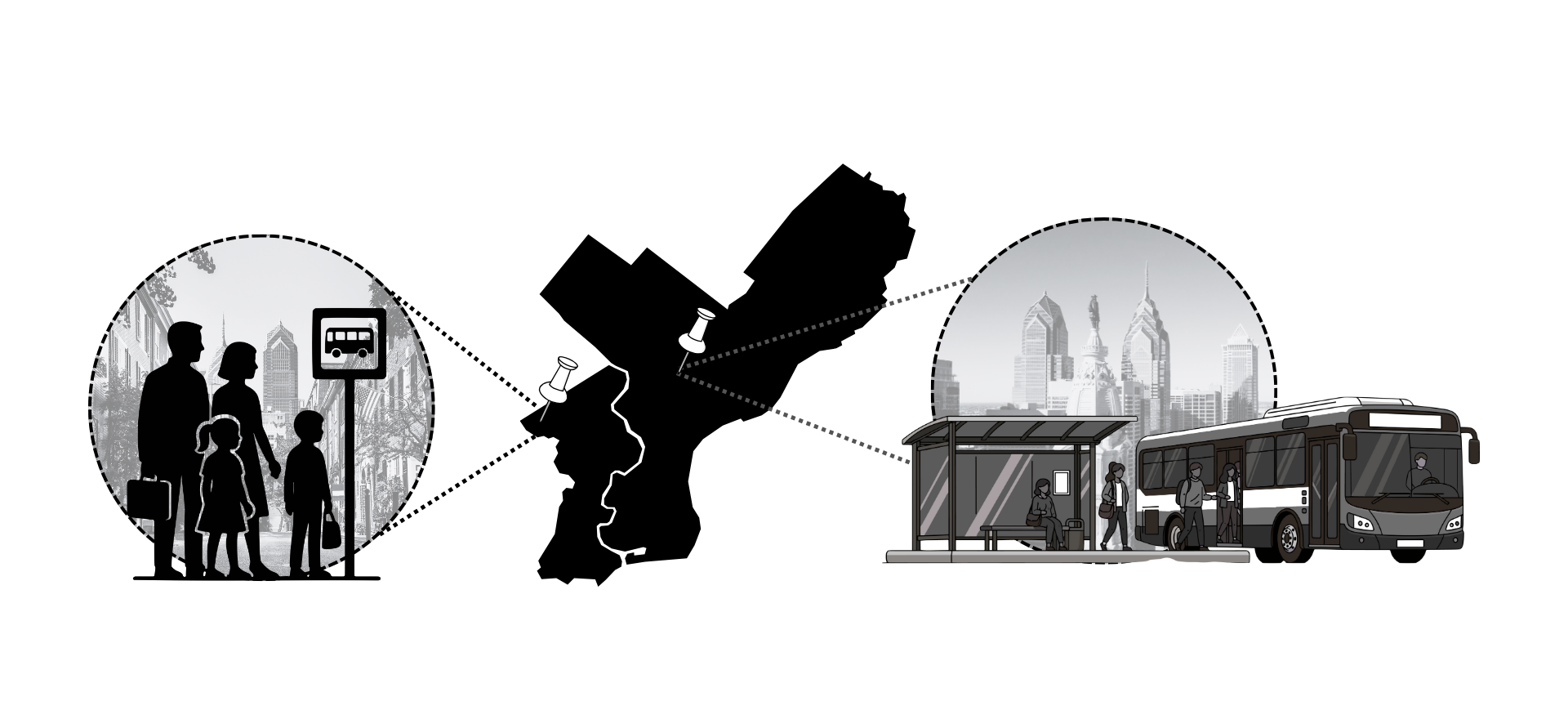
A Tale of Two Neighborhoods

  • Charlie in West Philly: long waits, rising population
  • Center City: frequent service, stable demand
  • Planning relies on past ridership… but neighborhoods are changing
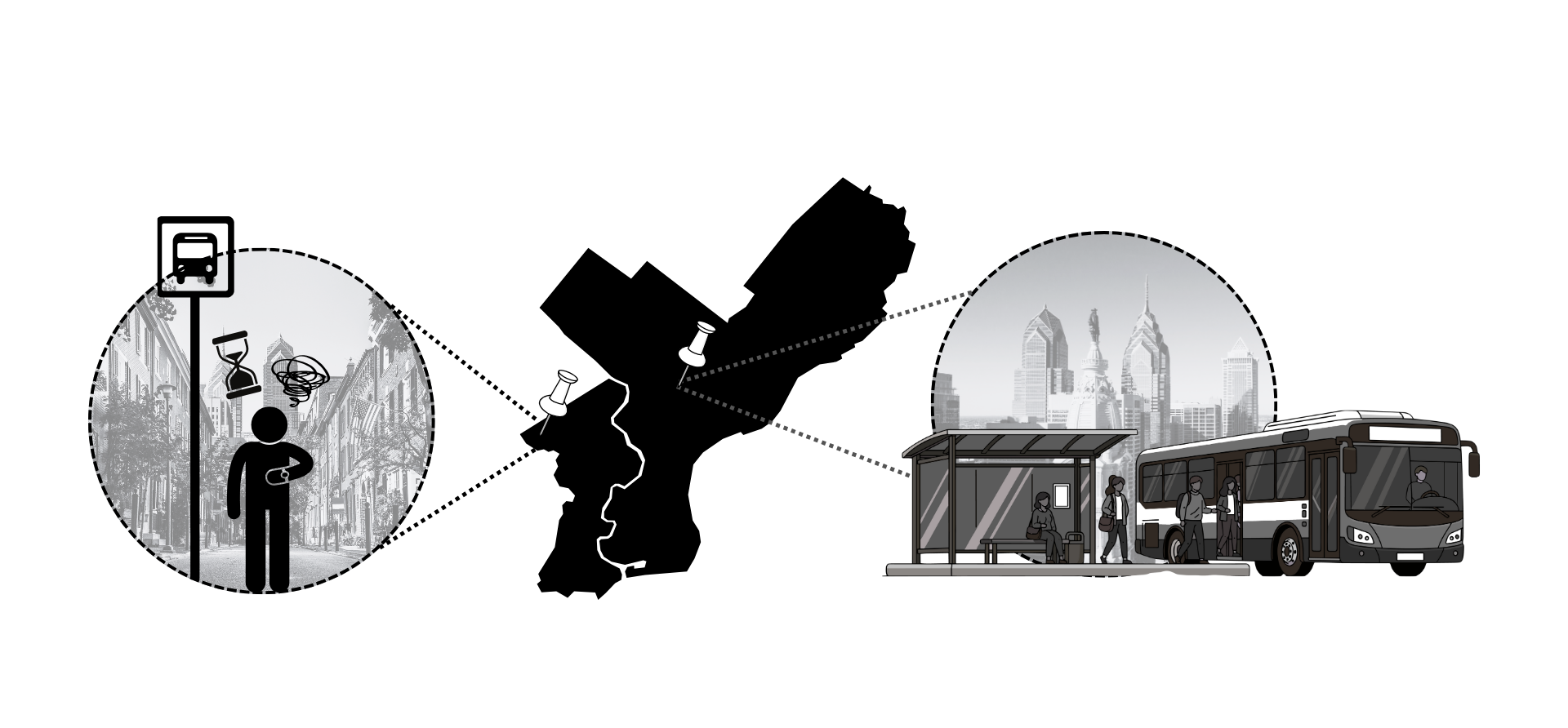
Carlie, who’s waiting for the bus

The Problem

  • Transit planning relies on historical ridership.
  • Hard to see where demand is emerging.
  • Risk of investing in wrong places.
  • Inequities worsen when growing neighborhoods are overlooked.

Policy Question

Where will ridership grow next, and how should the city prepare?

Why This Matters

  • Misaligned predictions -> overcrowded routes, underutilized infrastructure, and widening inequities in transit access.
  • More accurate assessments -> fairer resources allocation, transit equity.
  • Transparent and data-driven modeling builds trust and accountability in city governance.

Our Solution

A census-tract–level ridership demand prediction model

  • Future ridership forecasts
  • Fine spatial detail
  • Multi-source data integration

Why It Helps

Prediction supports:

  • Identifying emerging and high cluster demand
  • Anticipating future strain on routes
  • Guiding equitable investment
  • Revealing suppressed demand

Data Overview

Our Data Foundation

  • SEPTA Ridership Statistics
    400 census tracts with average daily on and off passenger number during fall 2023.

  • Neighborhood & Contextual Data Combined city (OpenDataPhilly) and census (ACS 2023) information on:

    • Demographics: race, household income, employment, education, car ownership
    • Public safety: proximity to violent crime
    • Accessibility: commute time
    • Amenities & services: universities, hospitals

What Do Ridership Look Like?

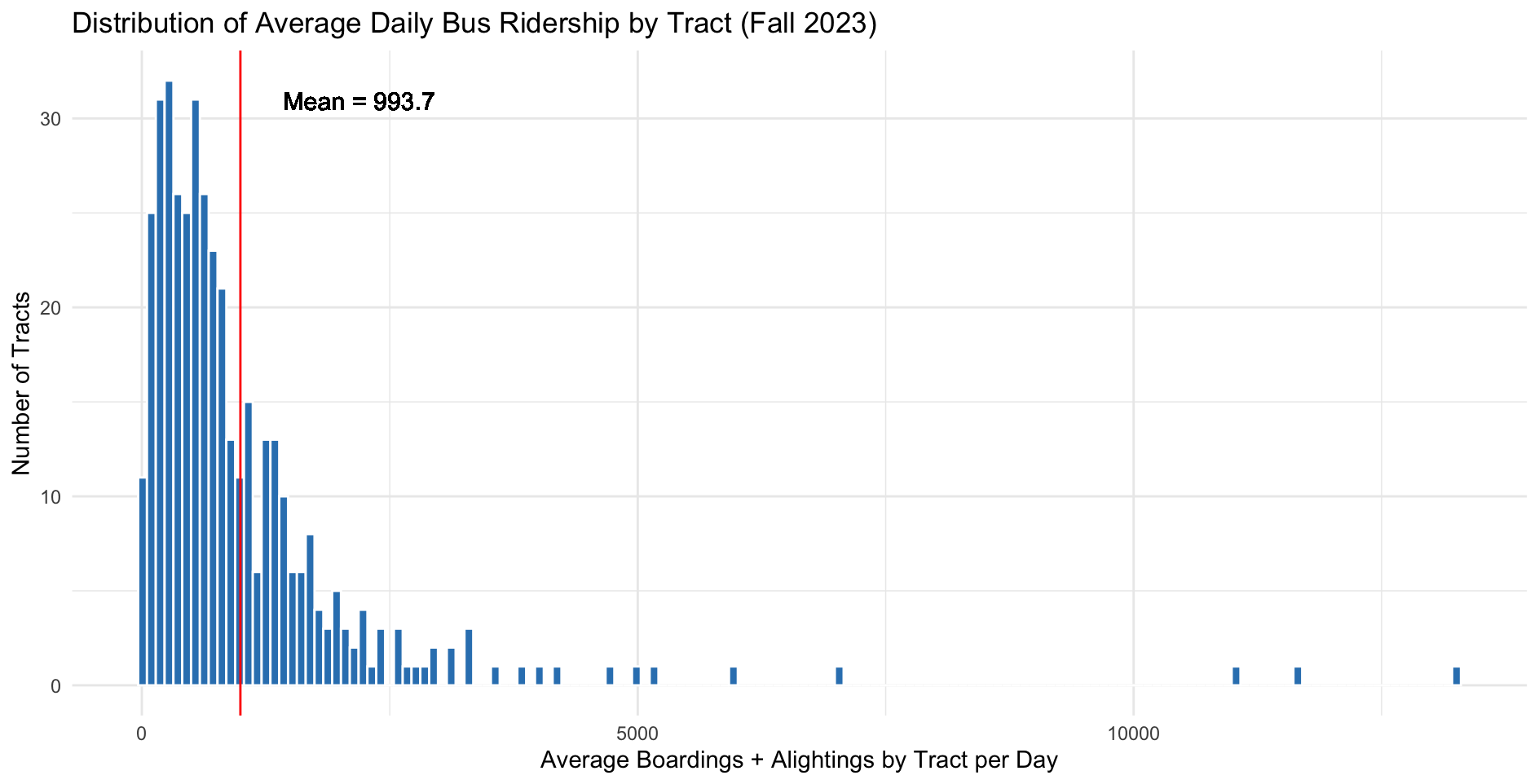
Histogram of Average Bus Ridership by Tract

Key Findings

Most census tracts have relatively low bus activity, while a small number of tracts account for extremely high ridership, creating a heavily skewed distribution.

Where Are High Ridership Demands Area?

Key Findings:

  • Ridership is highly concentrated in a small number of tracts, shown by the bright yellow hotspots.
  • High-ridership areas align with major transit corridors or dense activity centers (e.g., employment hubs, commercial districts).
  • Most tracts have relatively low to moderate ridership, reflected by the predominance of darker purple shades.
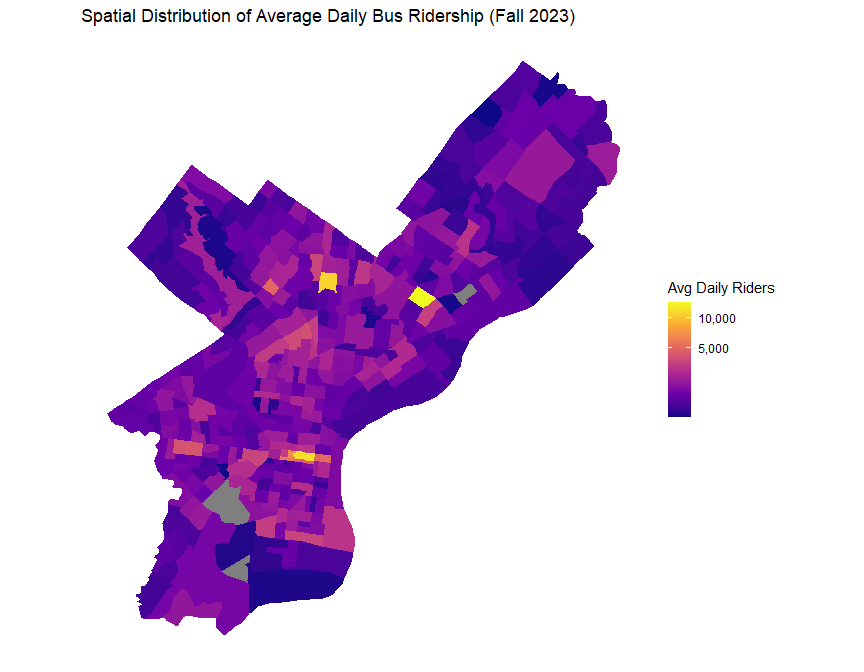
Geographical Distribution of Ridership Demands

Ridership & Car Ownership

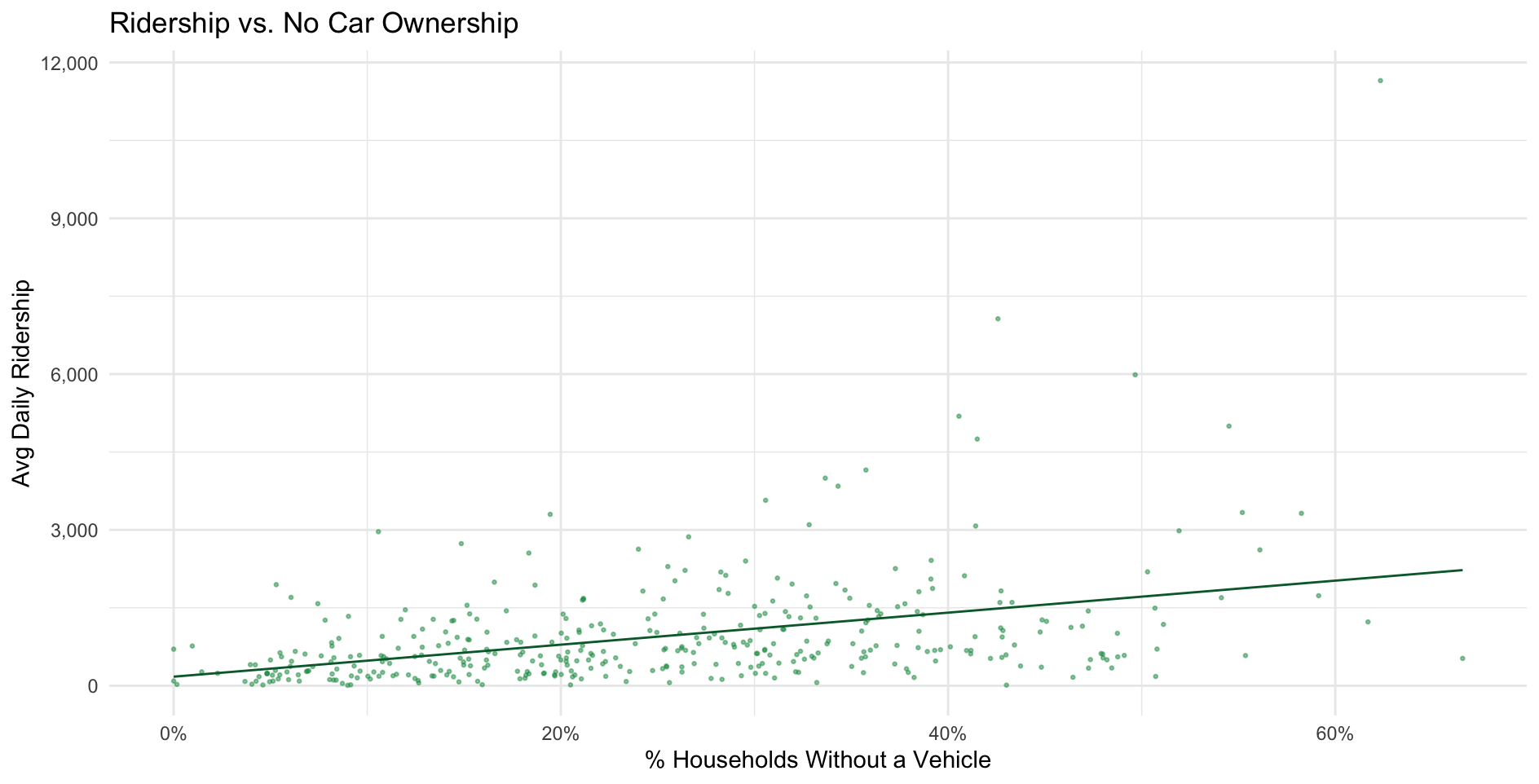
Scatter Map of Bus Ridership vs. Zero Car Ownership by Tract

Key Findings:

  • Tracts with higher shares of households without a vehicle show notably higher bus ridership.
  • This indicates that household transportation access is a key driver of bus usage.

Ridership & Crime Incidents
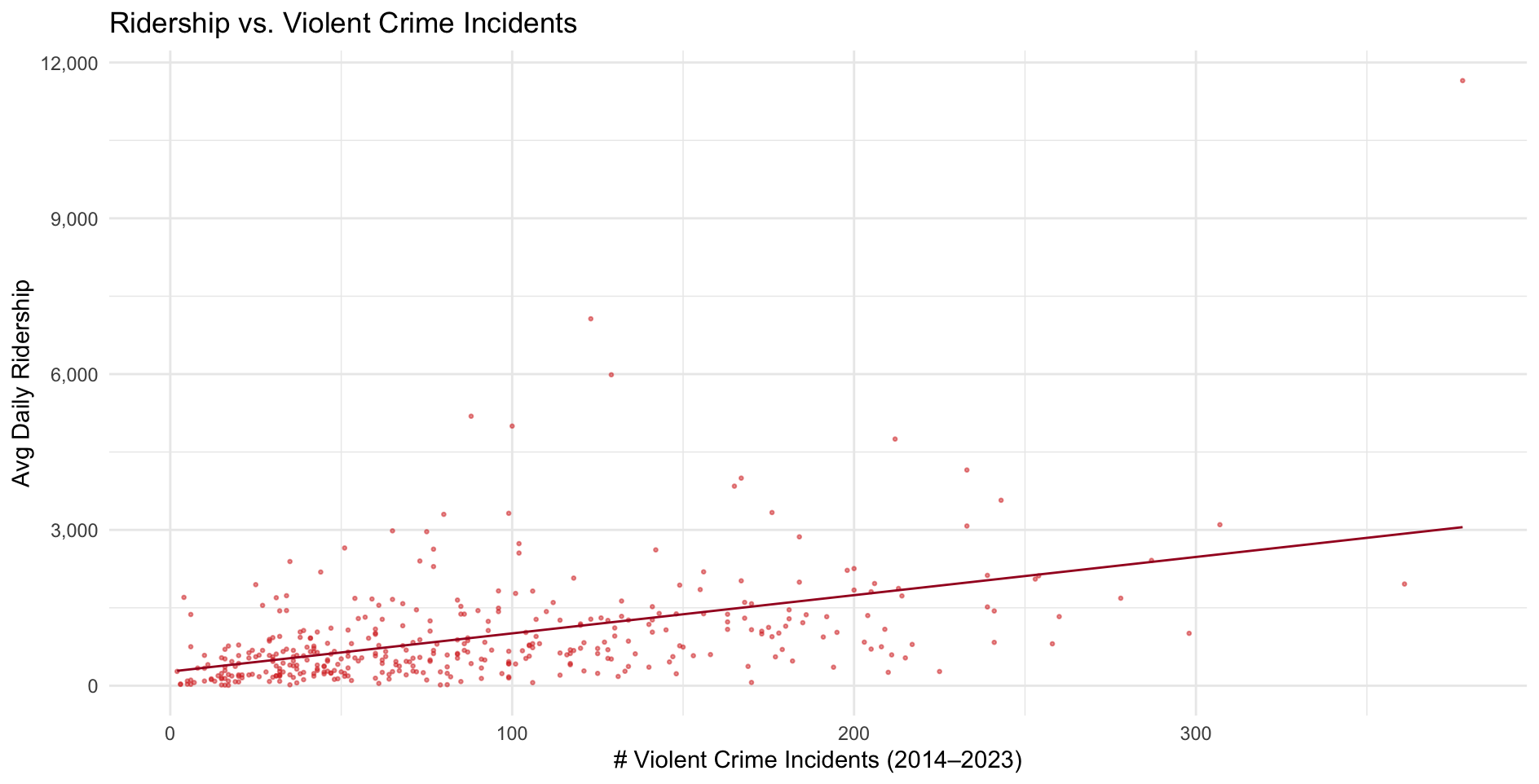
Scatter Map of Bus Ridership vs. Zero Car Ownership by Tract

Key Findings:

  • Tracts with more violent incidents tend to have higher bus ridership.
  • This likely reflects broader socio-economic conditions rather than crime itself.

What Makes Our Approach Better?

  • Not dependent on outdated surveys
  • Combines multiple data layers
  • Spatially granular (census tract)
  • Forward-looking, not reactive

How Does Model Performance Improve?

Model CV MAE (riders)
KDE - Spatial Only 582 0.19
OLS – ACS only 615 0.21
OLS – ACS + Spatial 527 0.43
OLS – ACS + Spatial + FE 532 0.70
Poisson – ACS only 608 0.26
Poisson – ACS + Spatial 477 0.58
Poisson – ACS + Spatial + FE 491 0.77

Each additional data layer improves accuracy, with adding spatial features producing the largest jump (lowest RME and higher R²).

What Drives the Improvement?

  • Census & Socioeconomic Context captures population, race, employment, education, car ownership, commute time.
  • Adding Spatial Data accounts for proximity to universities, hospitals, and violent crime.
  • Adding Neighborhood Fixed Effects controls for unobserved local traits.

Best Models

Model CV MAE (riders)
Poisson – ACS + Spatial 477 0.58

The model capture demographic, socioeconomic, and spatial factors.

Top Predictors

  • Violent crime incidents
  • Car ownership
  • % Asian residents
  • Population Density

Hardest To Predict

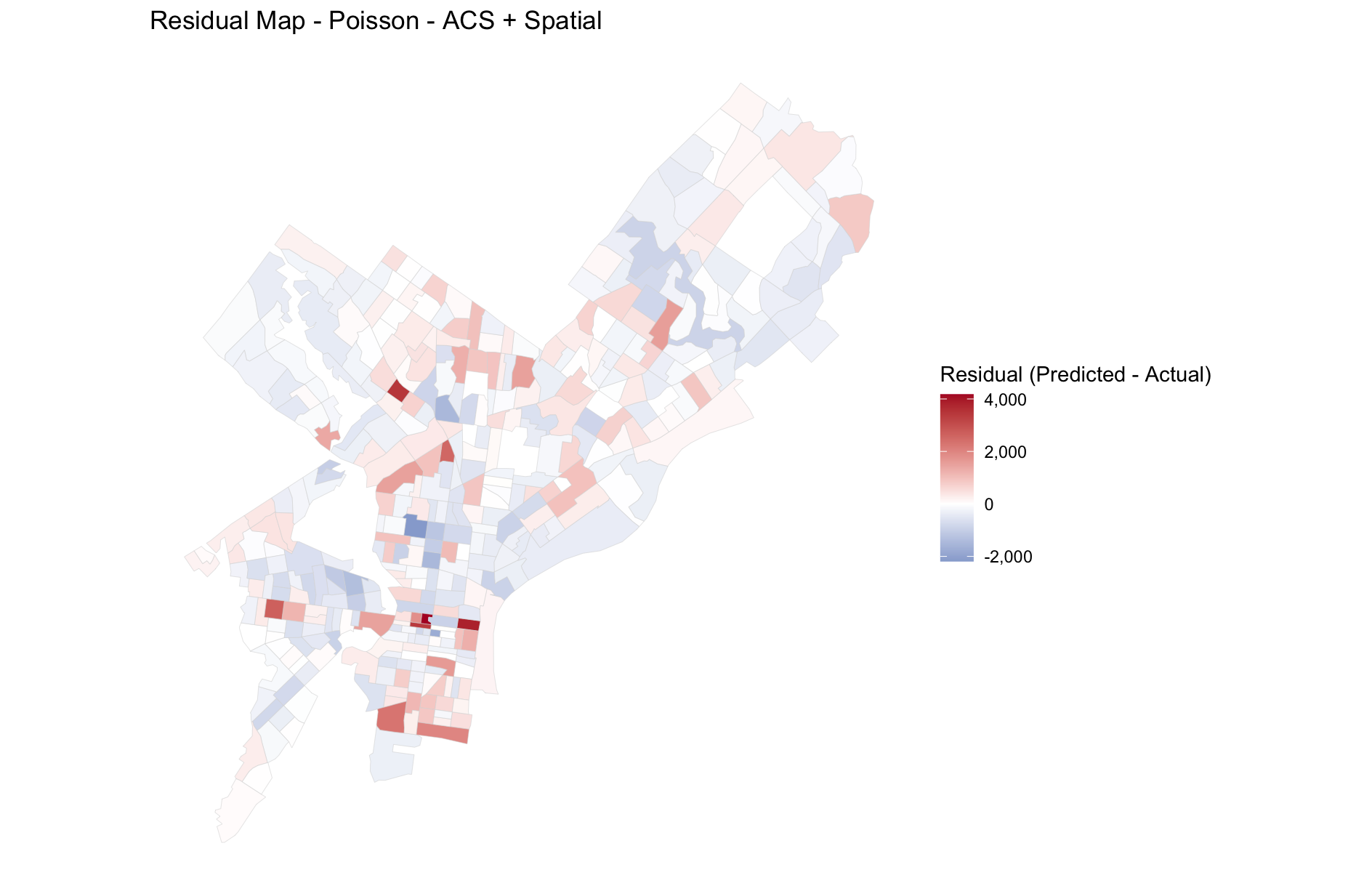
Visualization of Residual by Tract

  • Residuals are calculated as actual ridership minus predicted ridership.
  • Center city and South Philadelphia have over predicted values, while North and West Philadelphia show under predicted values.

Implementation: How the City Can Use It

Key Actions

  • Anticipate future demand
  • Prioritize investments
  • Support bus network redesign
  • Strengthen grant applications

Data Required

  • Hourly, stop-level ridership counts
  • Transit schedule data
  • ACS demographic data
  • Spatial data (crime, POIs, land use)
  • Development projections

Costs & Benefits

Benefits:

  • Proactive, equitable planning
  • Higher ridership
  • Resource efficiency
  • Better access for residents

Costs:

  • Data pipelines
  • Training
  • Model maintenance

Safeguards

  • Annual fairness audits
  • Public documentation
  • Human oversight
  • Use predictions to enhance service, not cut it!

Looking Forward

Limitations

  • Restricted data sources: Cleaned transportation center due to lack of stop-level data. Key factors such as transit supply could be included.
  • Time misalignment across datasets.
  • Remaining spatial autocorrelation + Coarse neighborhood fixed effects.

Next Steps

  • Expand the dataset to include OSM street networks, land-use patterns, accessibility metrics, and more detailed transit service supply.
  • Explore additional modeling approaches such as spatial regression or machine learning methods to capture non-linear and spatially dependent patterns.

Closing Story: A Better Future Commute

Charlie’s commute:

  • Prediction identifies rising demand
  • City increases frequency early
  • Reliable, shorter commute

People waiting for the bus

THANK YOU!